5 Biker Short Looks for a Campus Week (Class, Library, Late Dining Hall)
Quick Answer: A campus day covers a 20-degree temperature swing, several miles of walking, and hours of sitting in hard chairs - which is exactly what biker shorts are good at, provided the layer on top does the work. The formula: a thick matte short in a solid neutral, one oversized top layer that covers the seat, a shoe that handles a mile of walking, and a bag that distributes weight. Five looks below, one per day, built from roughly eight pieces total.
September on a campus is the hardest dressing week of the year and the one with the least time to think about it. These five recycle the same core pieces so getting dressed takes forty seconds.
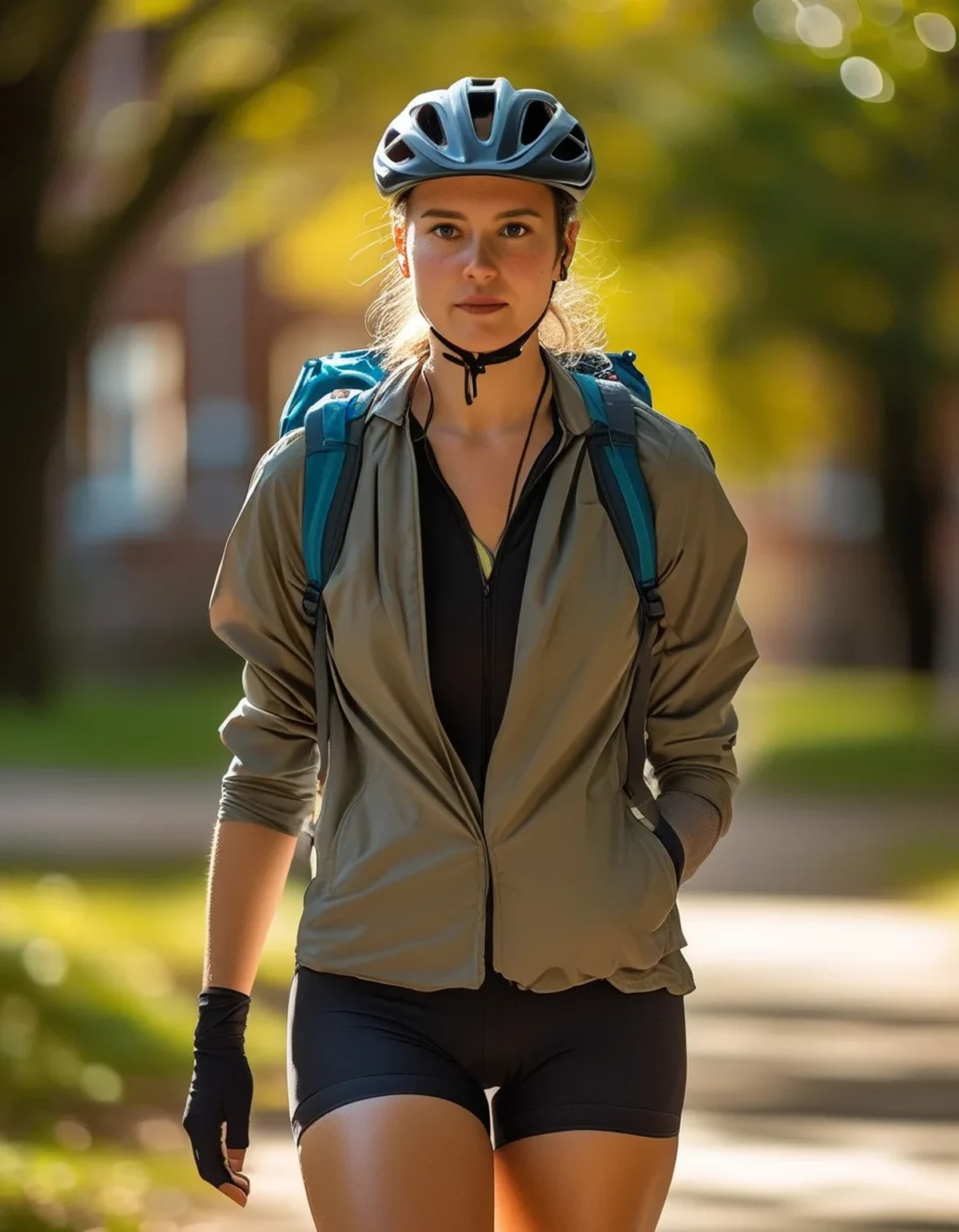
Look 1: The 8am lecture - oversized crew and a long cardigan
The pieces: black biker shorts, an oversized crew sweatshirt, a long open cardigan or duster, chunky white sneakers, crew socks.
Why it works for the arc of the day: the cardigan handles a cold 8am walk and comes off entirely by 11. The oversized crew covers the seat, which is the single rule that makes biker shorts work outside a gym.
The temperature logic: three layers on the top half, one on the bottom. The top half is where you can add and remove; the bottom stays constant. This is the whole principle of dressing for a campus day.
The comfort detail: crew socks with a chunky sneaker. Ankle socks slide down over a mile of walking and no-shows will produce a blister by week two. This is unglamorous and it is the difference between a good day and a bad one.
The bag: a proper backpack with two straps. A tote on one shoulder with three textbooks in it is a genuine one-sided load, and the effects show up as neck and shoulder complaints by October.
Length note: an 8-inch inseam short is the most versatile for this - long enough to sit comfortably in a lecture hall chair, short enough to stay cool by afternoon.
Look 2: The library day - long-sleeve fitted top and an oversized shirt
The pieces: biker shorts in a charcoal or deep olive, a fitted long-sleeve ribbed top, an oversized flannel or cotton overshirt worn open, low-profile sneakers or loafers.
Why it works for six hours in a chair: the fitted base means no bulk at the waist when you sit, and the overshirt can be removed and used as a lap layer in an over-air-conditioned library. Buildings that are freezing indoors while it is 80 outside is the standard September experience.
Why the overshirt beats a hoodie here: it looks intentional in a photograph, it is easier to take off in a quiet room, and it doubles as a cushion on a hard chair.
The detail that lifts it: roll the overshirt sleeves once. It takes two seconds and stops the whole look from reading as pyjamas.
Fabric note: this is the day for a slightly thinner short since you are mostly sitting - just verify the opacity by doing a full squat in front of a mirror before you leave. The squat test is non-negotiable with any biker short and takes three seconds.
The shoe: something you can slip off under a table. Six hours in a lace-up trainer is worse than it sounds.
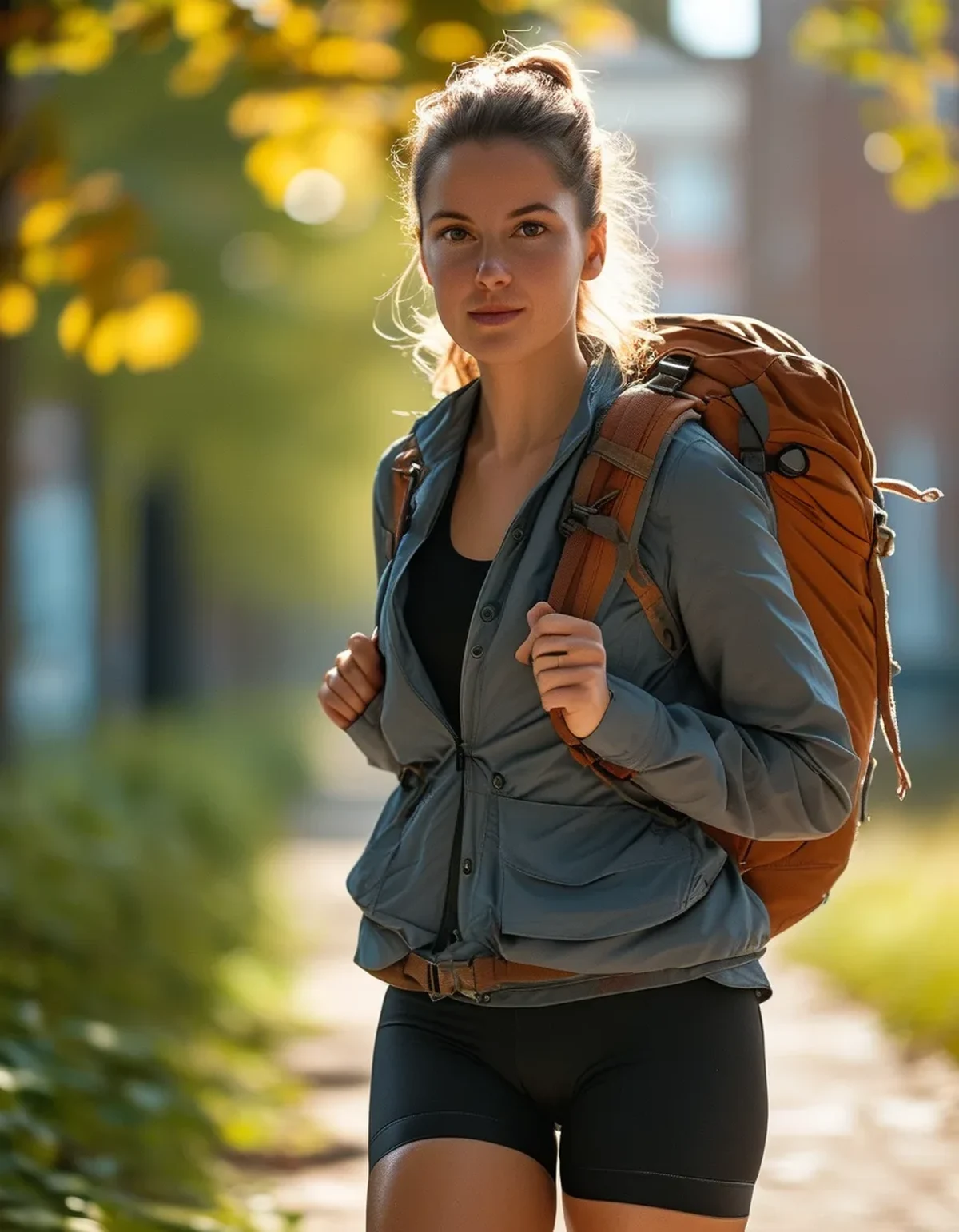
Look 3: The gym-to-class day - matching set and a real jacket
The pieces: a matching biker short and crop or tank set, an oversized zip-up or a coach jacket, trainers, and a spare crew sweatshirt in the bag.
Why it works: the matching set is the only situation where biker shorts can carry an outfit on their own, because the coordination reads as deliberate. The jacket over it converts it from gym to campus in one move.
The practical logic: you are training either side of a class, and changing entirely between the two is a thirty-minute tax. This look means you change a top, not an outfit.
The rule that still applies: if the top is cropped, the outer layer needs to cover the seat when it is on. A cropped set with an open jacket walking to a lecture is a look; whether it is the one you want at 8am on a Wednesday is a personal call.
The spare sweatshirt matters. Post-workout, buildings feel colder, and a damp base layer under a jacket is unpleasant for two hours. A dry crew in the bag solves it.
And check the short’s fabric for the gym version specifically. A styling-oriented short in a soft cotton blend is not what you want for training - it rides and it holds sweat. Use a technical pair for this day.
Look 4: The presentation day - biker shorts and a blazer
The pieces: thick black biker shorts, a fine knit or a simple shell, an oversized blazer, loafers or a low ankle boot, and small gold jewelry.
Why it works: the blazer is the strongest formality signal available and it does the entire job on its own. Structure on top and ease on the bottom is a well-established formula and it works with shorts as readily as with trousers.
The length ratio is what makes it or breaks it. The blazer should be longer than the shorts by a clear margin. A cropped blazer over shorts creates competing hemlines and reads as unfinished.
The shoe rule is strict here. A loafer or a low boot; not a trainer. This is the single item that determines whether the outfit reads as presentation or as errands.
Fabric matters more than usual. A thin, shiny, or logo-heavy short undermines everything the blazer is doing. Thick, matte, plain black, no visible branding.
Know the room, though. This works for a seminar presentation, a club pitch, or a group project. For a formal interview or a professional placement, wear trousers - the point of knowing the formula is also knowing where it stops.

Look 5: The Friday night - biker shorts and something with structure
The pieces: black biker shorts, a structured or corset-style top, an oversized denim or leather jacket, and a boot with a bit of height.
Why it works: contrast. A structured top against a soft short creates the tension that makes a casual bottom read as intentional, which is exactly the same principle as the blazer look in a different register.
The temperature reality: a late-night walk across a campus in late September is cold. The jacket has to be a real jacket rather than a token layer, and a longline one that covers the seat also handles the coverage rule.
The shoe is doing double duty. It needs to look right and survive a walk home across uneven ground. A block heel boot manages both; a stiletto does not.
Practical detail: pockets or a cross-body bag. A clutch is a liability on a night that involves walking. A small cross-body worn across the body leaves both hands free and does not slide off.
And the general rule across all five looks: thick and matte on the bottom, structure or volume on top, seat covered, and a shoe that can walk a mile. Get those four right and the same three pairs of shorts cover an entire semester.
One buying note for the whole week: two pairs of black at different thicknesses, plus one in a neutral like charcoal or olive, covers everything above. Rotating three pairs also means each one lasts far longer than a single pair worn daily.
TL;DR:
- The formula: thick matte shorts, an oversized layer that covers the seat, a shoe that handles a mile, and a two-strap backpack.
- Layer the top half and keep the bottom constant - that is how you handle a 20-degree swing between an 8am walk and a noon quad.
- Do the squat test on every pair before you leave, and wear crew socks rather than no-shows for walking days.
- A blazer or a structured top converts biker shorts to a presentation or a night out; the shoe is what decides which read you get.
- Three pairs - two black at different weights, one neutral - covers a full semester and outlasts a single pair worn daily.
Biker shorts survive a campus day better than almost anything else because the day is mostly walking, sitting, and temperature swings. The shorts are the easy part; the layer on top is where the outfit actually happens.
See It in Motion
Seen here: Super High Waist Embossed Yoga Leggings with Inner Pocket — shop it on bubblelime.com
Keep Reading
This article is for general informational and styling purposes only. Fit, sizing, and product availability may vary.
